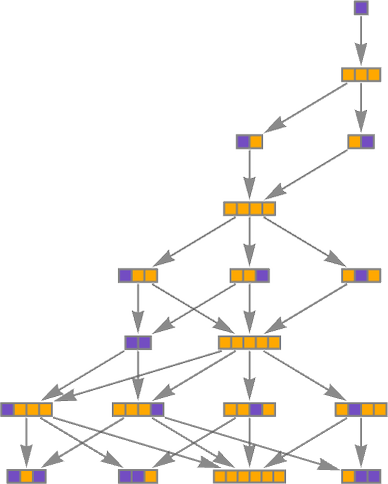
Computational Metaphysics: an operational approach to investigate the fundamental nature of reality
This project led by the Wolfram Institute intends to explore the philosophical implications of the advancements in computational science brought about by the Wolfram Physics Project and the Wolfram Metamathematics Project. Particularly, this project aims to investigate metaphysical implications and connections to traditional fields of philosophy.

This project was made possible through the support of a grant from Templeton World Charity Foundation, Inc funder DOI 501100011730 through grant 10.54224/34225. The opinions expressed in this publication are those of the author(s) and do not necessarily reflect the views of Templeton World Charity Foundation, Inc.
People
-

Stephen Wolfram
Project Leader
-
Carlos Zapata-Carratalá
Project Leader
-

James Wiles
Coordinator & Engineer
-

Robert Chis-Ciure
Co-organizer
-
Ellynne Dec
Co-organizer
Project Details
Computational Metaphysics
What is the fundamental nature of reality? Can we model it using computation, and if so, what new insights can we gain about causality, consciousness, objectivity, and existence itself?
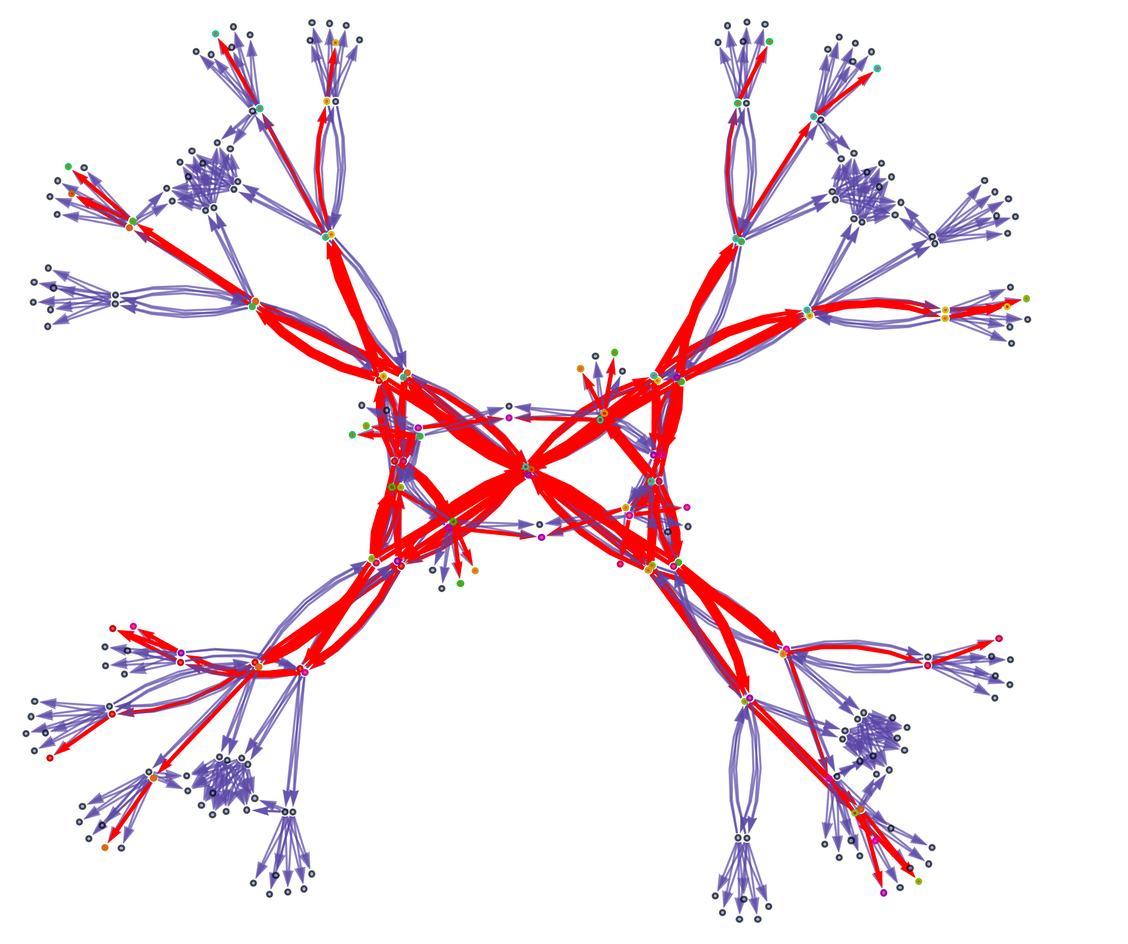
At the center of this work is a framework developed from recent advances in the Wolfram Physics Project, including the ruliad (the space of all possible computational universes), observer theory (a computational model of how observers extract regularities from complexity), and principles such as computational irreducibility and equivalence. These tools allow us to treat questions about time, mind, identity, and causation not only philosophically but also as models that can be simulated, analyzed, and shared.
Core Questions
These are some of the questions that will serve as a primer for philosophy-computation collaborations:
How does Leibniz's monadology relate to the ruliad?
How does Kant's view of space and time relate to observer theory?
How does computational irreducibility relate to real or apparent free will?
What are the implications of these computational frameworks for the foundations of ontology?
How can observer theory help explain phenomena like objectivity, meaning and consciousness?
What are the consequences of treating our universe as a single sampling of the ruliad for the discussion on the nature of physical laws?
Objectives
This project will pursue four core objectives:
Formalization: Define metaphysical concepts (e.g., causality, objectivity, time, observers like us) within a computational framework in accordance with existing philosophical theories.
Interdisciplinary Integration: Bridge philosophy and computation through dual conversations, where a philosopher and a team member of the Wolfram Institute jointly develop new insights.
Public and Scholarly Dissemination: Produce publications, open-source tools, and public-facing media that expand access to and engagement with computational metaphysics.