
Institute Publications
What Ultimately Is There? Metaphysics and the Ruliad
Stephen Wolfram
“What ultimately is there?” has always been seen as a fundamental—if thorny—question for philosophy, or perhaps theology. But despite a couple of millennia of discussion, I think it’s fair to say that only modest progress has been made with it. But maybe, just maybe, this is the moment where that’s going to change—and on the basis of surprising new ideas and new results from our latest efforts in science, it’s finally going to be possible to make real progress, and in the end to build what amounts to a formal, scientific approach to metaphysics.

The Concept of the Ruliad
Stephen Wolfram
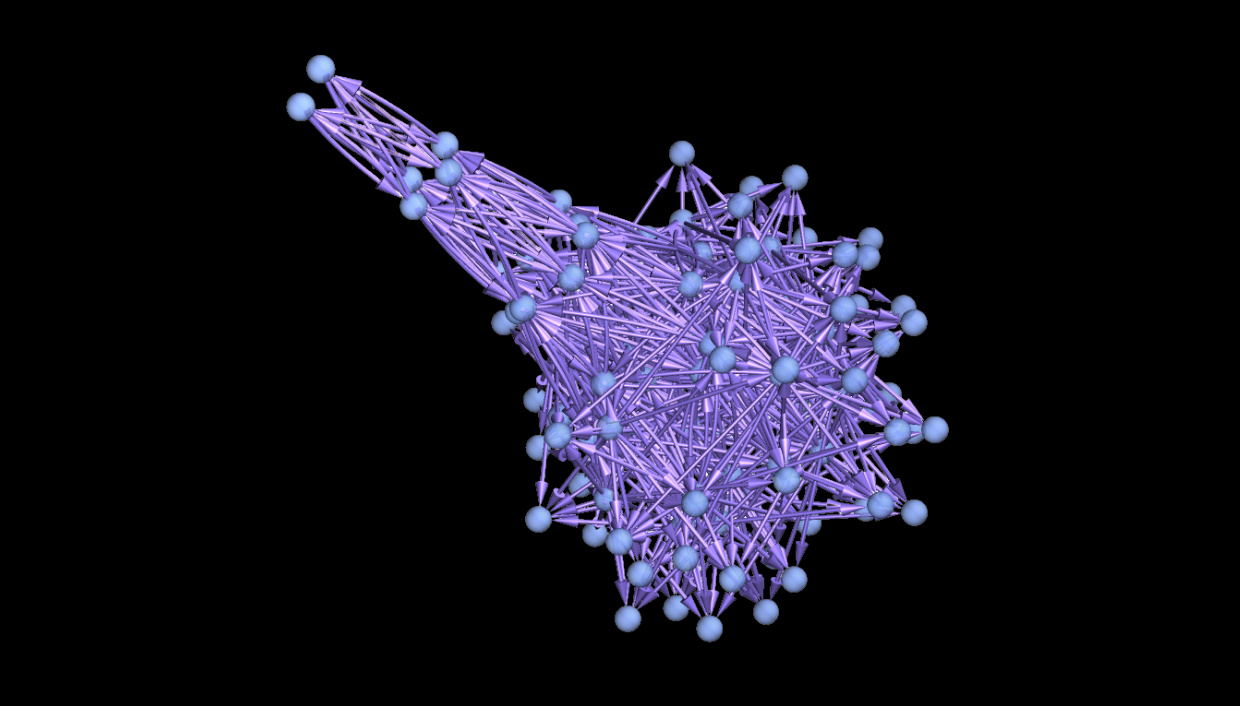
I call it the ruliad. Think of it as the entangled limit of everything that is computationally possible: the result of following all possible computational rules in all possible ways. It’s yet another surprising construct that’s arisen from our Physics Project. And it’s one that I think has extremely deep implications—both in science and beyond.

Exploring Rulial Space: The Case of Turing Machines
Stephen Wolfram
Let’s say we find a rule that reproduces physics. A big question would then be: “Why this rule, and not another?” I think there’s a very elegant potential answer to this question, that uses what we’re calling rule space relativity—and that essentially says that there isn’t just one rule: actually all possible rules are being used, but we’re basically picking a reference frame that makes us attribute what we see to some particular rule. In other words, our description of the universe is a sense of our making, and there can be many other—potentially utterly incoherent—descriptions, etc.