
Institute Output

On the Nature of Time
Stephen Wolfram
Time is a central feature of human experience. But what actually is it? In traditional scientific accounts it’s often represented as some kind of coordinate much like space (though a coordinate that for some reason is always systematically increasing for us). But while this may be a useful mathematical description, it’s not telling us anything about what time in a sense “intrinsically is”.

Foundations of Biological Evolution: More Results & More Surprises
Stephen Wolfram
A few months ago I introduced an extremely simple “adaptive cellular automaton” model that seems to do remarkably well at capturing the essence of what’s happening in biological evolution. But over the past few months I’ve come to realize that the model is actually even richer and deeper than I’d imagined. And here I’m going to describe some of what I’ve now figured out about the model—and about the often-surprising things it implies for the foundations of biological evolution.

Hypergraph rewriting and Causal structure of $\lambda$-calculus
Utkarsh Bajaj
Hypergraph rewriting is studied through categorical frameworks to establish foundational concepts of events and causality in graph rewriting systems. Novel concepts are introduced within double-pushout rewriting in adhesive categories. An algorithm is constructed to determine causal relations between events during λ-calculus evaluation, with extensions developed for arbitrary λ-expressions.

Quantum Potato Chips
Nikolay Murzin, Bruno Tenorio, Sebastian Rodriguez, John McNally, Mohammad Bahrami
This study maps qubit states under symmetric informationally-complete measurements to a tetrahedron in 3D space, identifying a "quantum potato chip" region where quantum states reduce to classical binary variables. States in this special region can be fully reconstructed using only two projective measurements, unlike states elsewhere in the quantum state space.

Nestedly Recursive Functions
Stephen Wolfram
Integers. Addition. Subtraction. Maybe multiplication. Surely that’s not enough to be able to generate any serious complexity. In the early 1980s I had made the very surprising discovery that very simple programs based on cellular automata could generate great complexity. But how widespread was this phenomenon?

What’s Really Going On in Machine Learning? Some Minimal Models
Stephen Wolfram
It’s surprising how little is known about the foundations of machine learning. Yes, from an engineering point of view, an immense amount has been figured out about how to build neural nets that do all kinds of impressive and sometimes almost magical things. But at a fundamental level we still don’t really know why neural nets “work”—and we don’t have any kind of “scientific big picture” of what’s going on inside them.

Ruliology of the “Forgotten” Code 10
Stephen Wolfram
For several years I’d been studying the question of “where complexity comes from”, for example in nature. I’d realized there was something very computational about it (and that had even led me to the concept of computational irreducibility—a term I coined just a few days before June 1, 1984). But somehow I had imagined that “true complexity” must come from something already complex or at least random. Yet here in this picture, plain as anything, complexity was just being “created”, basically from nothing. And all it took was following a very simple rule, starting from a single black cell.

Why Does Biological Evolution Work? A Minimal Model for Biological Evolution and Other Adaptive Processes
Stephen Wolfram
Why does biological evolution work? And, for that matter, why does machine learning work? Both are examples of adaptive processes that surprise us with what they manage to achieve. So what’s the essence of what’s going on? I’m going to concentrate here on biological evolution, though much of what I’ll discuss is also relevant to machine learning—but I’ll plan to explore that in more detail elsewhere.
Qualia and the Formal Structure of Meaning
Xerxes D. Arsiwalla
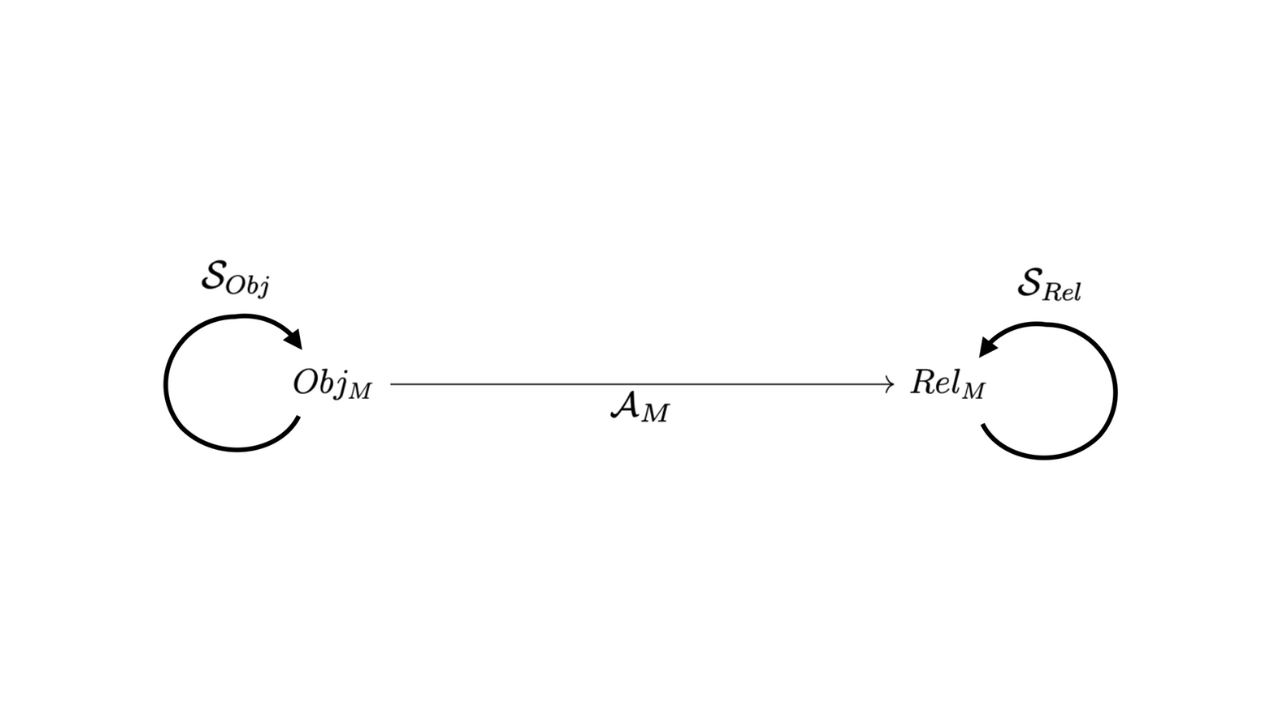
This work explores the hypothesis that subjectively attributed meaning constitutes the phenomenal content of conscious experience. This form of subjective meaning manifests as an intrinsic and non-representational character of qualia.

An Invitation to Higher Arity Science
Carlos Zapata-Carratalá, Xerxes D. Arsiwalla
Exploration of a wide range of higher-order phenomena across multiple disciplines and the preliminary application of hypergraph and hypermatrix methods.

Can AI Solve Science?
Stephen Wolfram
Particularly given its recent surprise successes, there’s a somewhat widespread belief that eventually AI will be able to “do everything”, or at least everything we currently do. So what about science? Over the centuries we humans have made incremental progress, gradually building up what’s now essentially the single largest intellectual edifice of our civilization. But despite all our efforts, there are still all sorts of scientific questions that remain. So can AI now come in and just solve all of them?

General Relativistic Hydrodynamics in Discrete Spacetime: Perfect Fluid Accretion onto Static and Spinning Black Holes
Jonathan Gorard
This study investigates the effect of spacetime discretization on accretion dynamics of a relativistic fluid onto a spinning black hole, specifically noting that accretion rates decrease with increased discretization scale and that drag force sensitivity and instabilities intensify at critical discretization values.

Computational General Relativity in the Wolfram Language using Gravitas II: ADM Formalism and Numerical Relativity
Jonathan Gorard
This paper introduces the Gravitas computational general relativity framework's numerical subsystem, emphasizing its ability to perform 3 + 1 spacetime decompositions via the ADM formalism, handle complex simulations of gravitational phenomena like binary black hole mergers, and leverage adaptive refinement algorithms based on hypergraph rewriting within the Wolfram Language.

Observer Theory
Stephen Wolfram
We call it perception. We call it measurement. We call it analysis. But in the end it’s about how we take the world as it is, and derive from it the impression of it that we have in our minds.

Aggregation and Tiling as Multicomputational Processes
Stephen Wolfram
Multiway systems have a central role in our Physics Project, particularly in connection with quantum mechanics. But what’s now emerging is that multiway systems in fact serve as a quite general foundation for a whole new “multicomputational” paradigm for modeling.

Expression Evaluation and Fundamental Physics
Stephen Wolfram
It is shown that way the Wolfram Language rewrites and evaluates expressions mirrors the universe’s own evolution: both proceed through discrete events linked by causal relationships, form “spacetime-like” structures and branch into multiway histories analogous to quantum superpositions.
Ruliology: Linking Computation, Observers and Physical Law
Dean Rickles, Hatem Elshatlawy, Xerxes D. Arsiwalla
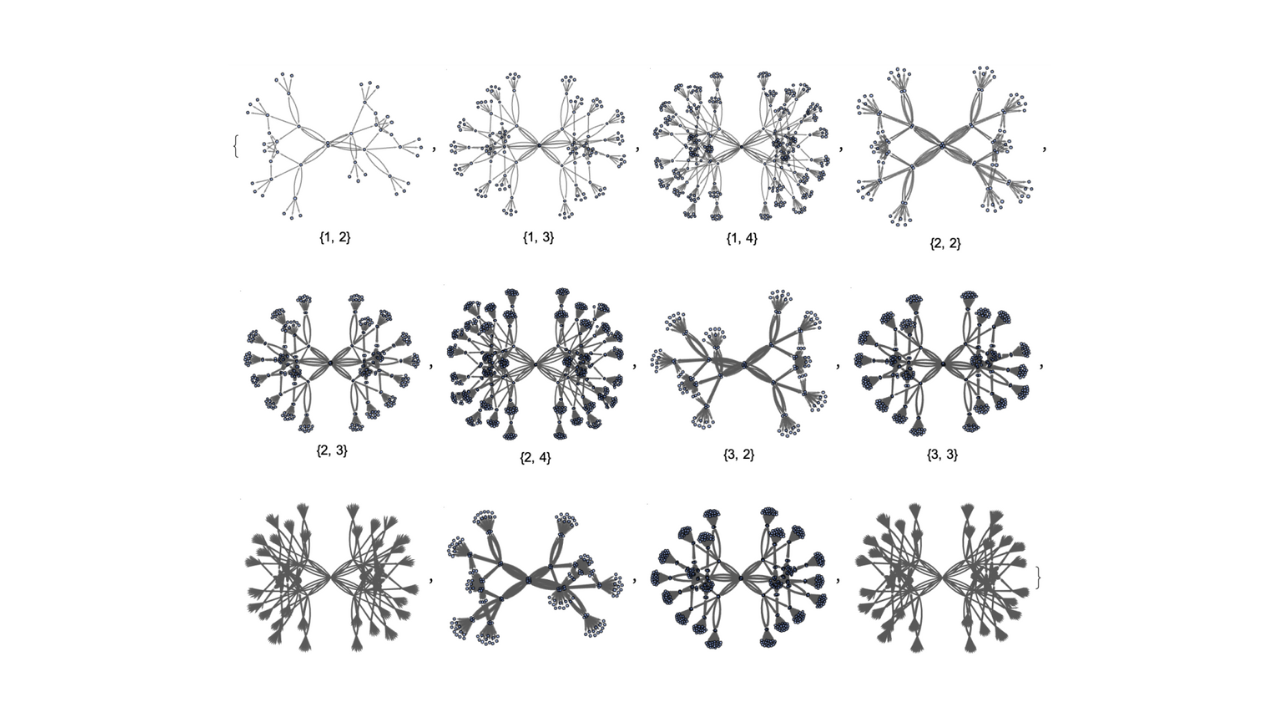
Physical laws arise from the sampling of the Ruliad by observers (including us). This naturally leads to several conceptual issues, such as what kind of object is the Ruliad? What is the nature of the observers carrying out the sampling, and how do they relate to the Ruliad itself? What is the precise nature of the sampling? This paper provides a philosophical examination of these questions, and other related foundational issues, including the identification of a limitation that must face any attempt to describe or model reality in such a way that the modeller-observers are included.
Computational General Relativity in the Wolfram Language using Gravitas I: Symbolic and Analytic Computation
Jonathan Gorard
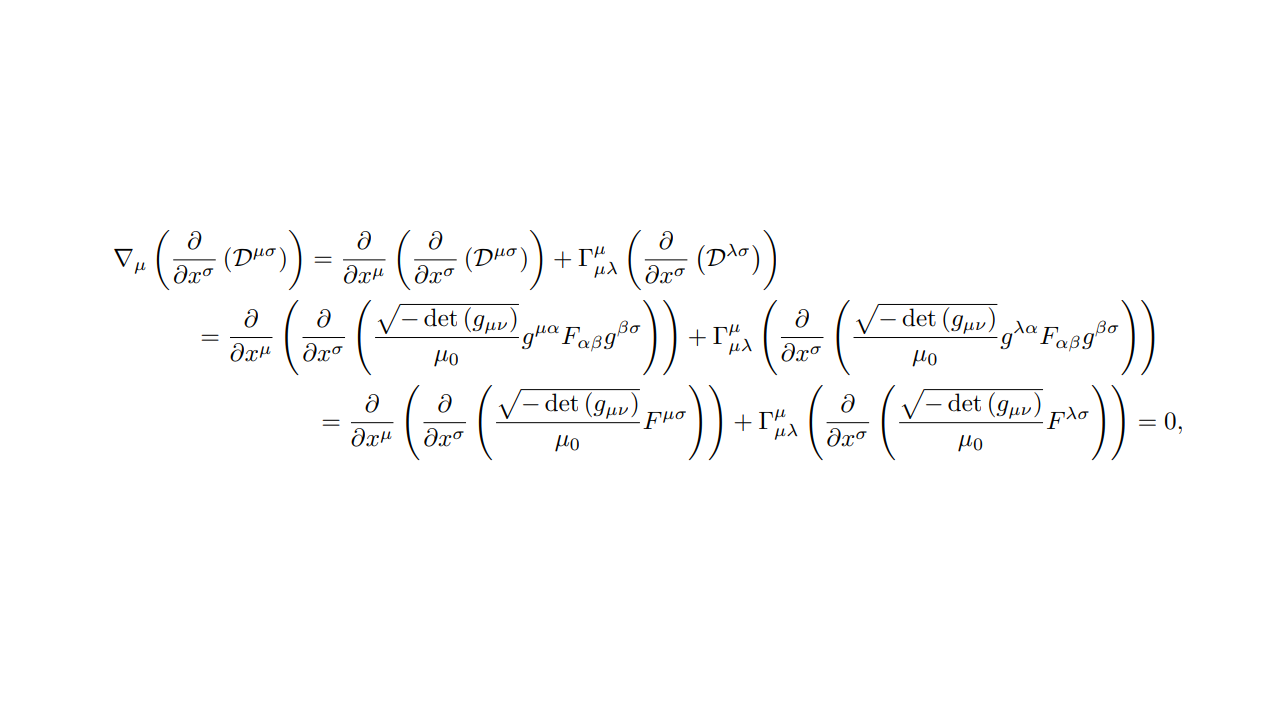
Gravitas introduces a robust computational framework for general relativity in the Wolfram Language, featuring seamless integration of symbolic and numerical tools to handle complex spacetime geometries and solve the Einstein field equations.
Biunit pairs in semiheaps and associated semigroups
Bernard Rybołowicz, Carlos Zapata-Carratalá
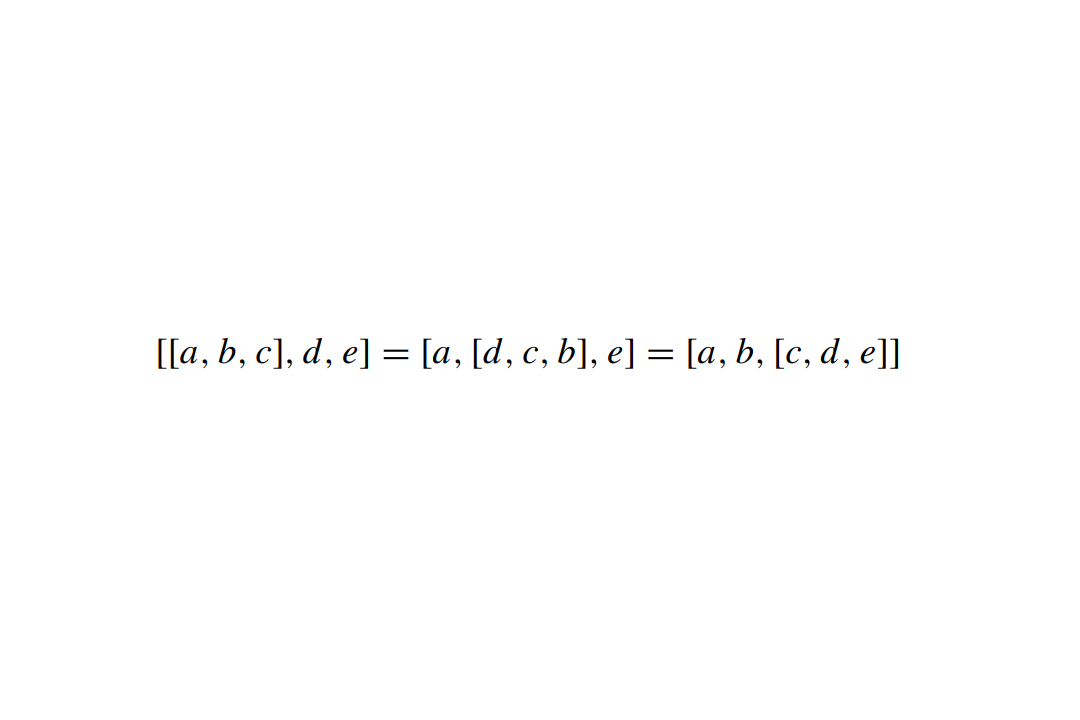
This research introduces biunit pairs in semiheaps, and establishes a direct correspondence between monoids with specific switches and semiheaps, leading to the novel concept of diheaps.
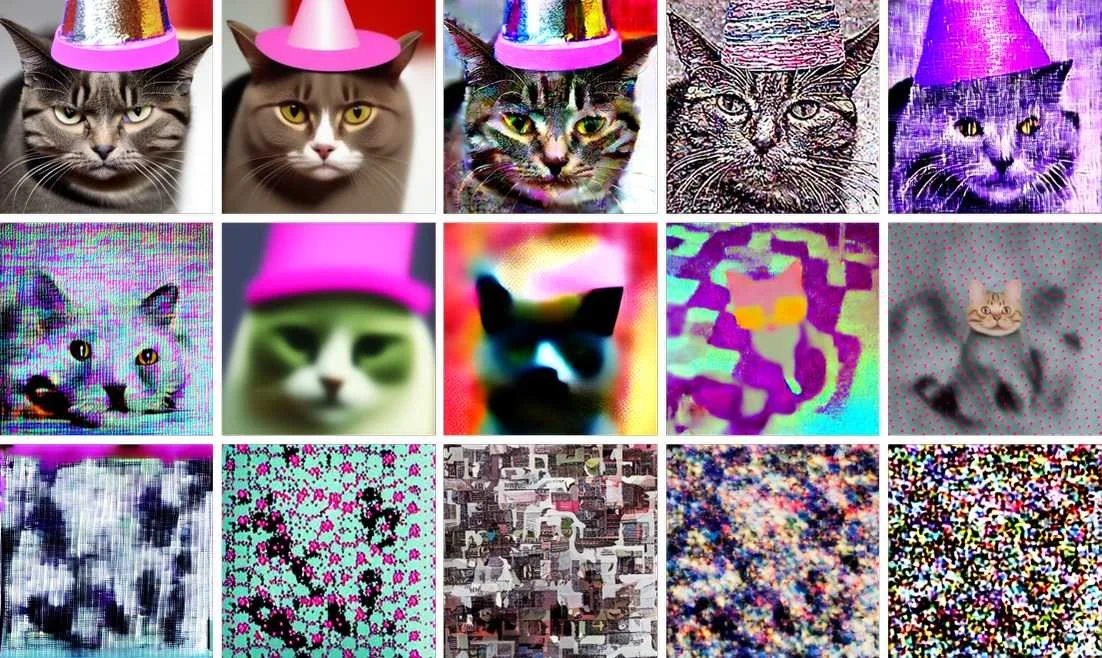
Generative AI Space and the Mental Imagery of Alien Minds
Stephen Wolfram
How do alien minds perceive the world? It’s an old and oft-debated question in philosophy. And it now turns out to also be a question that rises to prominence in connection with the concept of the ruliad that’s emerged from our Wolfram Physics Project.